Tradition and transformation in piano dance works by Bach, Schönberg, and Chopin
Shall we dance?
Tradition and transformation in piano dance works by Bach, Schönberg, and Chopin
Antoni Pizà
This recital offers a compelling journey through three centuries of keyboard music inspired by dance forms. From the refined structures of the Baroque suite to the expressive richness of Romanticism and the radical innovations of the twentieth century, the program reveals an evolving dialogue between tradition and transformation.
Johann Sebastian Bach’s Partita No. 1 in B-flat major, BWV 825 stands as a cornerstone of Baroque keyboard literature. As part of his Clavier-Übung, the Partita reflects both pedagogical intent and artistic ambition, elevating the traditional dance suite into a work of remarkable expressive breadth. Each movement embodies a stylized dance while transcending its origins through intricate counterpoint and ornamentation. The opening Prelude establishes a tone of elegance and clarity, unfolding in an improvisatory style that invites the listener into a world of refined expression. The Allemande follows with a noble, flowing character, its melodic lines richly adorned. In contrast, the Courante introduces rhythmic vitality and lightness, while the Sarabande offers a moment of introspective depth, emphasizing expressive embellishment and harmonic subtlety. The paired Menuets bring courtly charm and balance before the concluding Gigue bursts forth with lively energy and contrapuntal brilliance, bringing the suite to a spirited close. In Bach’s hands, dance becomes both structure and metaphor, a framework for intellectual rigor and poetic expression.
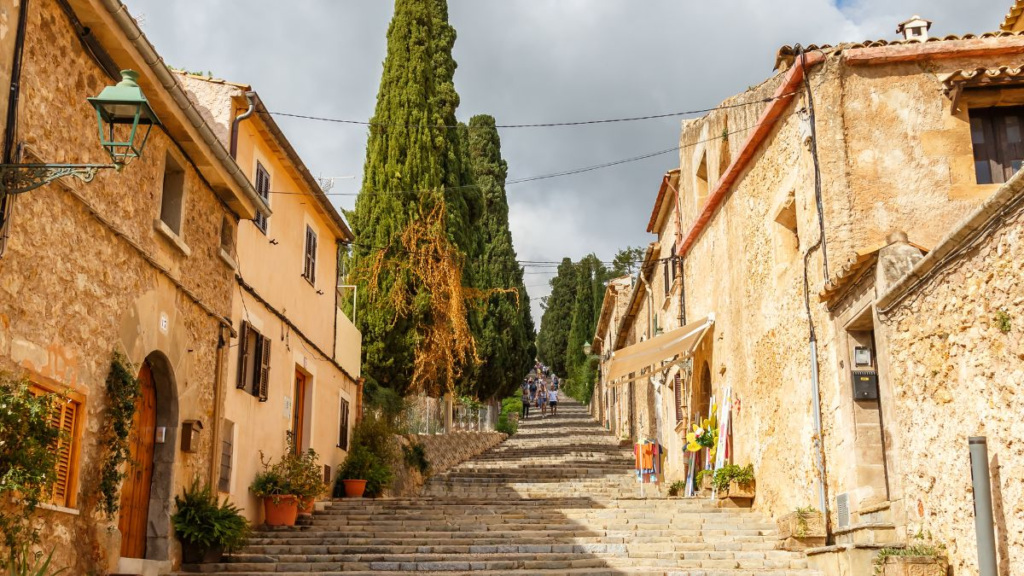
Nearly two centuries later, Arnold Schönberg’s Suite for Piano,Op. 25 reimagines the Baroque suite through the lens of modernity. Composed in the early 1920s, the work represents the first fully realized application of his twelve-tone method, a system designed to bring structural coherence to atonal music. Despite this radical harmonic departure, Schönberg deliberately adopts the forms of earlier dance movements, creating a fascinating dialogue between past and future. The Präludium introduces the tone row within a rhythmically driven context, while movements such as the Gavotte and Musette echo Baroque gestures, now refracted through a new musical language. The Intermezzo offers a brief lyrical contrast, and the Menuett and Trio recall Classical elegance in outline, if not in harmony. The Suite concludes with a virtuosic Gigue, dense with contrapuntal complexity. Schönberg’s work demonstrates that even the most innovative musical ideas can remain deeply rooted in historical forms, forging continuity across stylistic boundaries.
Robert Schumann’s Carnaval de Vienne, Op. 26 shifts the focus from formal abstraction to personal expression. Written in 1839 during his time in Vienna, the piece captures both the exuberance of carnival festivities and the composer’s introspective nature. The opening Allegro is bold and brilliant, imbued with a sense of playful defiance—most notably through its subtle quotation of La Marseillaise. The Romanze provides a lyrical respite, unfolding like an intimate song, while the Scherzino sparkles with wit and lightness. The Intermezzo, more elusive in character, hints at Schumann’s inner dualities, a hallmark of his musical personality. The Finale restores a sense of exuberance, combining virtuosity with festive spirit. In this work, dance is no longer merely stylized but becomes a vehicle for narrative, emotion, and imagination, reflecting the Romantic ideal of deeply personal expression.
The second half of the program turns to Frédéric Chopin and his Waltzes, which transform a popular social dance into a sophisticated art form. Chopin’s waltzes are not intended for the ballroom but for the salon and the concert stage, where their elegance and expressive nuance can be fully appreciated. Spanning his career, the selected works reveal a wide range of moods and styles. Brilliant early pieces such as the Grande Valse Brillante showcase virtuosity and charm, while more introspective works, including the so-called “Farewell” Waltz in A-flat major, evoke a sense of nostalgia and poetic reflection. The famous Minute Waltz delights with its lightness and perpetual motion, while later waltzes demonstrate increasing harmonic subtlety and emotional depth.
Throughout, Chopin balances rhythmic grace with expressive flexibility, allowing the music to breathe with a natural rubato that transcends the rigidity of dance.
Taken together, these works illuminate the enduring legacy of dance forms in Western music, illustrating how composers across eras reinterpret inherited traditions to articulate new artistic visions. From Bach’s architectural clarity to Schönberg’s structural innovation, from Schumann’s Romantic imagination to Chopin’s lyrical refinement, this program offers a rich and multifaceted exploration of musical evolution. [Festival de Pollença 19-VIII-2026]

This entry is licensed under a Creative Commons Attribution-NonCommercial-ShareAlike 4.0 International license.

